Our Location
Lagos, Nigeria
Lagos, Nigeria
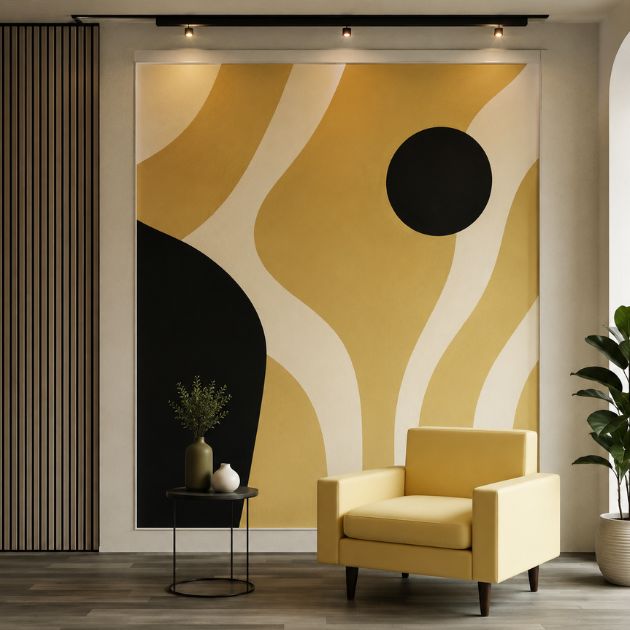
Custom mural painting, feature walls, and art installation for homes, offices, restaurants, and schools in Lagos and across Nigeria.
A blank wall is the cheapest square footage in any building, and the most wasted. In most Nigerian homes, offices, restaurants, and schools, walls are treated as something to paint one flat colour and forget. A feature wall, a hand-painted mural, or a properly installed piece of art changes that. It turns a wall into the reason a room gets noticed, photographed, and remembered.
At ReinoSpace, feature walls and murals aren’t an add-on we tack onto the end of a renovation — they’re one of our core disciplines, built into the same team that handles the structural, electrical, and finishing work. That matters more than it sounds. A mural painted by an artist with no renovation background often ignores lighting, surface movement, humidity, and how the wall interacts with the rest of the room. A feature wall installed by a contractor with no art background often ends up structurally sound but visually flat. We do both under one roof, which is why the murals we paint are lit properly, the feature walls we build are finished properly, and the art we install is mounted properly — the first time.
This page explains exactly what we do, how we do it, what it costs to think about, and who typically commissions this kind of work in Nigeria.
These three terms get used interchangeably in Nigeria, and that confusion often leads people to ask for the wrong thing. Here’s the actual distinction:
A feature wall is a single wall in a room finished differently from the others — a different material, texture, colour, or pattern — to draw the eye and anchor the space. It might be textured plaster, timber cladding, stone veneer, wallpaper, or a bold paint contrast. A feature wall doesn’t have to involve any painting or artwork at all; it’s about material and texture contrast.
A mural is a hand-painted (or digitally printed and applied) image or design covering a wall, ceiling, or large surface. Murals can be realistic, abstract, brand-driven, or purely decorative. Unlike a feature wall, a mural is always image-based — it tells a story or makes a visual statement rather than just changing texture.
An art installation refers to standalone or wall-mounted art pieces — sculptures, framed collections, 3D wall art, hanging installations — that are selected or commissioned and then properly integrated into a space, including mounting, lighting, and placement relative to furniture and sightlines.
In practice, the most effective spaces we’ve worked on combine all three: a textured feature wall as the base, a mural or art piece as the focal point, and lighting designed specifically to make it work at night as well as during the day. We scope every project honestly — if a client asks for a “mural” but what they actually need is a feature wall, we tell them that upfront, because it changes both the process and the cost.
1. Concept and site assessment. We start on-site, not on paper. Wall condition, natural light direction, room use, sightlines from key seating or work areas, and existing finishes all shape what will actually work — a concept that looks great in a mood board can fail completely once you account for where the sun hits that wall at 4pm.
2. Design development. We produce a design concept matched to the space — colour palette, imagery or texture direction, and scale — and walk the client through it before any paint or material touches the wall. For commercial clients (restaurants, offices, schools), this stage usually includes brand-colour matching and sign-off from more than one stakeholder.
3. Surface preparation. This is the step most independent muralists and painters skip or rush, and it’s the single biggest reason murals and feature walls fail early in Nigeria. Preparation includes moisture assessment, filling and sanding, priming appropriate to the substrate, and — critically — addressing any damp or humidity issues in the wall before anything decorative goes on top. A beautiful mural painted over a damp wall will bubble or flake within a season.
4. Execution. Hand-painted murals are done by our art team in stages, with client check-ins at key milestones for larger commercial pieces. Feature walls involving material changes (cladding, textured plaster, stone veneer) are installed by our construction team to the same structural standard as any other part of a renovation.
5. Lighting integration. This is where we differ most from a standalone artist or painter. A mural or feature wall without dedicated lighting looks flat after sunset — which, for a restaurant, office reception, or church auditorium, is often when it matters most. We plan accent lighting (wall-washers, picture lights, or integrated LED detailing) as part of the same project, not as an afterthought client have to source separately later.
6. Sealing and handover. Depending on location and material, murals and feature walls are sealed or top-coated to protect against Nigeria’s humidity and dust, and we walk the client through basic care before handover.
We get your problem, then bring real-life solution to it. Let us know what you want and we will handle the rest.
Nigeria’s climate — high humidity in the south, dust and heat in the north, and heavy rainy-season moisture almost everywhere — is harder on painted and applied wall finishes than most international design content accounts for. A few things we build into every project as a result:
We also account for dust — a real, everyday factor in most Nigerian cities — by recommending matte or satin finishes that clean more easily over glossy finishes that show every mark, for high-traffic feature walls in offices, schools, and restaurants.
We don’t publish a fixed price per square metre for murals or feature walls, and any provider who quotes one without seeing your wall is guessing. Cost is driven by a small number of factors that genuinely change the number:
The most reliable way to get an accurate number is a site visit or a detailed photo/video walkthrough, which is the first step of every quote we provide.
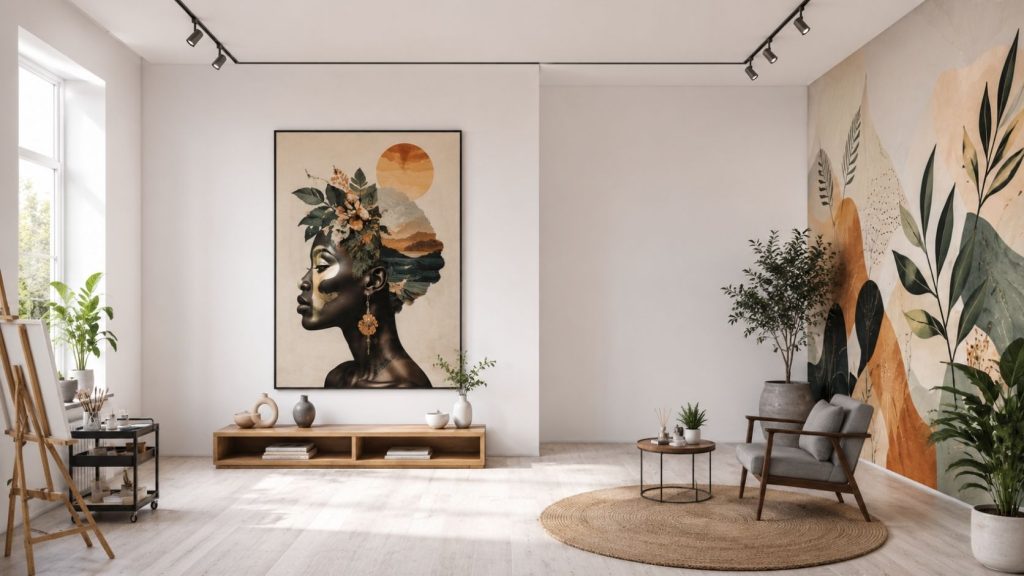
We offer a wide range of services including renovation, interior design, interior decoration, architectural design, space management, Art integration, lighting design, POP, drywall, painting, and premium finishing solutions.
How much does a mural cost in Lagos? It depends on wall size, design complexity, and material — a small accent mural in a home costs considerably less than a large-scale commercial mural with custom lighting. We provide an accurate quote after seeing the wall, either in person or via photos and measurements.
Can you paint a mural on an exterior wall? Yes, with UV-stable, weather-resistant materials suited to exterior exposure. Exterior murals need different paint, sealants, and maintenance expectations than interior ones, and we’ll advise on this during the concept stage.
Do you offer feature walls without a full renovation? Yes. Feature walls, murals, and art installation are offered as standalone services and don’t require a full renovation project. Many of our clients commission a single feature wall or mural as a focused project on its own.
How long does a mural take to complete? Timelines vary by size and design complexity, from a few days for a smaller residential mural to a few weeks for a large, detailed commercial piece. We provide a specific timeline as part of every quote.
Can you match our brand colours for a commercial mural or feature wall? Yes. For restaurants, offices, schools, and other commercial clients, we work from brand guidelines to match colours precisely and can incorporate logos or brand elements into the design where appropriate.
Do murals and feature walls hold up in Nigeria’s climate? With the right preparation, materials, and sealing — matched to your specific wall, location, and sun/moisture exposure — yes. Most early failures in mural and feature-wall work come from skipped surface preparation or the wrong material choice for the environment, not from the concept itself. This is built into our process, not sold as an optional extra.