Our Location
Lagos, Nigeria
Lagos, Nigeria
Interior design and interior decoration are not the same service. Learn the real difference, and find out which one your Nigerian home or office actually needs.
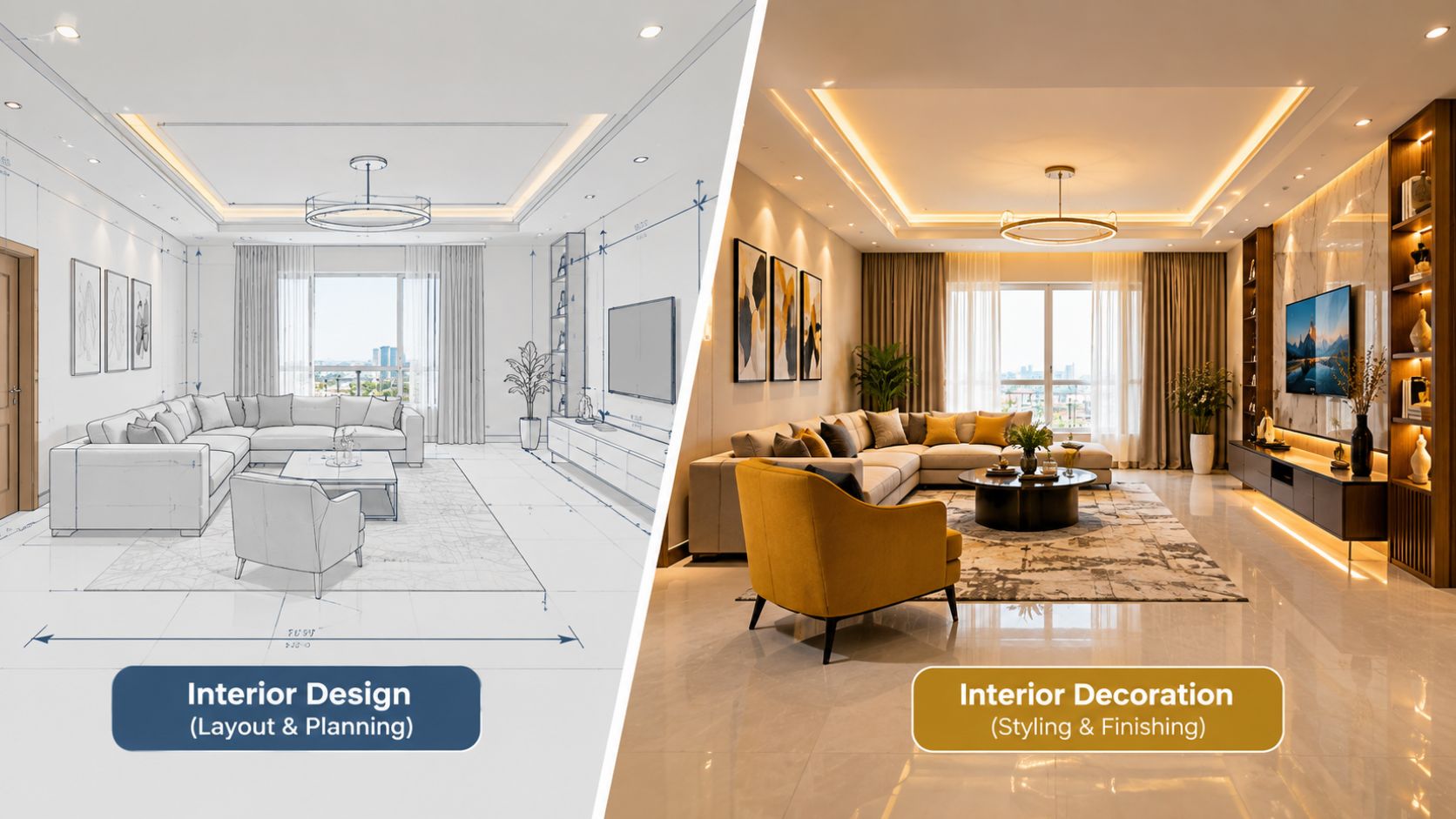
Most Nigerian homeowners and office managers use “interior design” and “interior decoration” as if they mean the same thing. They don’t. One deals with how a space works. The other deals with how it looks. Hiring the wrong one for your project can cost you time, money, and a result that still doesn’t solve your original problem.
This confusion shows up constantly in real renovation conversations. Someone calls to “redecorate” a living room, only to discover the real issue is poor space planning that no amount of new furniture will fix. Someone else hires a designer for a simple styling refresh that a decorator could have handled for a fraction of the cost. Both situations come from the same root cause: not knowing where design ends and decoration begins.
This guide clears that up. You’ll learn what interior design actually covers, what interior decoration actually covers, and a simple way to decide which one your Nigerian home or office needs right now. We’ll also cover the common case where you genuinely need both, and how to choose the right professional in Lagos, Abuja, or any other Nigerian city without wasting money on the wrong service.
Interior design is a technical discipline. It deals with how a space is planned, structured, and made to function well for the people using it. An interior designer looks at walls, layout, lighting, ventilation, and traffic flow before thinking about colour or furniture.
In practice, interior design often includes:
Because interior design touches structural and technical decisions, it usually happens early in a renovation, before finishes are chosen. A designer working on a Lagos apartment might reconfigure a cramped kitchen layout, plan where new lighting circuits go, and decide how a living room connects to a balcony — all before a single wall gets painted.
ReinoSpace’s own Interior Design & Space Planning service sits in this category, handling layout and spatial decisions rather than only surface-level styling.
Interior decoration is a visual discipline. It deals with how a space looks and feels once the layout is already settled. A decorator works with what exists — walls, furniture, and fixtures — and focuses on colour, texture, styling, and finishing touches.
Interior decoration typically includes:
A decorator generally doesn’t move walls or change a room’s structure. Instead, they take a space as it stands and make it feel finished, cohesive, and visually appealing. This is why interior decoration is often faster and cheaper than a full design project — it’s working with the bones of a space, not changing them.
Finishing work like POP ceiling and drywall installation, along with mural painting and feature walls, sits firmly in this decorative layer — the visual finish applied once the space itself is already working correctly.
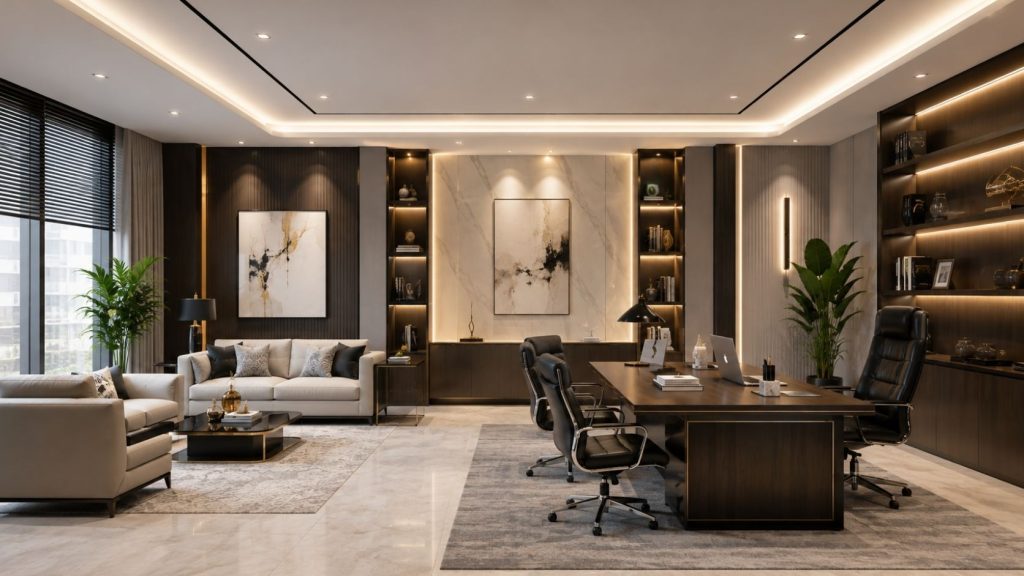
This is the part most articles rush through. The differences go deeper than “design is technical, decoration is visual,” and understanding each dimension separately makes it much easier to know what you’re actually paying for.
Interior design deals with the shell of a space. That includes wall placement, room flow, lighting layout, and how one area connects to another. A designer might combine two small rooms into one open-plan living area, or reposition a kitchen to improve access to natural light.
Interior decoration deals with everything inside that shell once it’s settled. That includes wall colour, furniture, curtains, rugs, and artwork. A decorator works within the existing layout and focuses entirely on how the finished space looks and feels.
Interior design draws on technical knowledge of space, materials, lighting, and sometimes basic structural principles. Many interior designers understand building layouts well enough to know which walls can move safely and which can’t, and they often work directly with architects or engineers on larger projects.
Interior decoration relies more on visual training — an eye for colour, proportion, texture, and how furniture and finishes work together. It doesn’t typically require structural knowledge, since decorators aren’t changing the physical layout of a space.
A designer usually starts with a brief, a site assessment, and a floor plan. Decisions are made in a sequence: layout first, then lighting, then finishes, with each stage informing the next.
A decorator usually starts with the existing space as a fixed starting point. The process moves faster because there’s no layout to plan around — the work centres on selecting and arranging what goes into a space that already works structurally.
Interior design projects that touch walls, electrical layout, or plumbing routes may need to account for building safety and, on larger commercial jobs, coordination with regulatory or facility approval processes. This is one reason design work in Nigeria often runs alongside a renovation contractor rather than as a standalone service.
Interior decoration rarely involves this layer at all. Painting, styling, and furnishing a room don’t typically require the same level of technical sign-off as structural changes.
A design project typically produces a floor plan, a lighting plan, material specifications, and coordination with the contractors executing the structural work. The “deliverable” is a functioning, well-planned space.
A decoration project typically produces a styled, finished room — the paint applied, the furniture placed, the artwork hung. The “deliverable” is the finished look, not a plan for someone else to execute.
Design costs are usually tied to the complexity of the space and the amount of technical planning and contractor coordination involved. A layout reconfiguration with new lighting circuits costs more than a simple room refresh, because it involves more disciplines working together.
Decoration costs are usually tied to material and furnishing choices rather than technical complexity. Two rooms of the same size can have very different decoration costs depending on whether the client chooses budget furnishings or premium, imported pieces.
Designers typically work through a structured process — brief, concept, plan, execution — with fewer but more significant decision points along the way (approving a floor plan, for example, rather than choosing between ten cushion fabrics).
Decorators typically involve the client in more frequent, smaller decisions — colour swatches, furniture options, accessory choices — since the process is built around personal taste rather than technical constraints.
| Factor | Interior Design | Interior Decoration |
|---|---|---|
| Focus | Function and structure | Appearance and styling |
| Typical changes | Layout, walls, lighting plan, space flow | Colour, furniture, finishes, accessories |
| Training basis | Technical: space, materials, safety | Visual: colour, texture, proportion |
| Process | Sequential: layout → lighting → finishes | Direct: style and furnish an existing space |
| Regulatory involvement | Possible, for structural or electrical work | Rare |
| Deliverable | A plan for the space, executed with contractors | A finished, styled room |
| Timing in a project | Early, before finishes are chosen | Later, after layout is settled |
| Typical cost driver | Complexity of structural and technical work | Quality and quantity of furnishings and finishes |
| Involves contractors? | Usually, for structural or electrical work | Rarely, unless installing feature walls or murals |
| Example task | Reconfiguring a cramped kitchen layout | Choosing paint colours and furniture for that kitchen |
The clearest way to remember it: design decides what a space becomes. Decoration decides how that space feels once it’s finished.
Most people can answer this question honestly by asking what’s actually bothering them about their space.
You likely need interior design if:
You likely need interior decoration if:
A simple test: if moving furniture around wouldn’t fix the problem, you probably need design, not decoration.
Yes, and in full renovations, this is actually the most common situation. A typical Lagos home renovation might start with design work — reconfiguring a layout, planning lighting, coordinating structural changes — and then move into decoration once the new layout is in place, with paint, furniture, and finishing touches applied on top.
This is why many renovation companies in Nigeria, ReinoSpace included, offer both services under one roof rather than forcing clients to hire a designer and a separate decorator and manage the handoff between them. Working with a single team across both stages keeps design decisions and decorative finishes consistent, since the person choosing your paint colours already understands why the layout was designed the way it was.
For a full renovation covering both stages, ReinoSpace’s Residential Renovation and Commercial & Office Renovation services combine design and decoration into a single coordinated project.
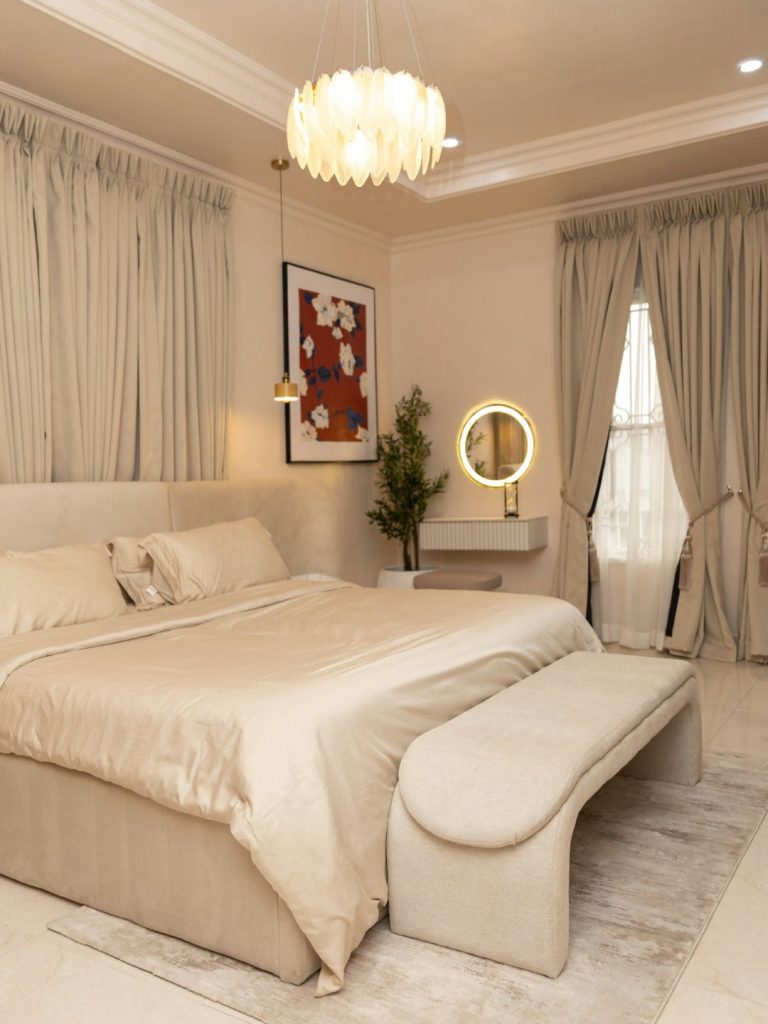
Once you know whether you need design, decoration, or both, the next step is vetting who you hire. A few practical checks apply regardless of which service you need:
Ask to see completed projects, not just concept renders. Anyone can produce an attractive mood board. Real, completed work in Nigerian homes or offices tells you far more about what to expect.
Confirm what’s included before work starts. A designer’s quote should state clearly whether it covers only planning, or planning plus contractor coordination. A decorator’s quote should state whether furniture and materials are included or sourced separately.
Check if they can handle both, if you need both. If your project involves layout changes and a full visual refresh, working with one team that offers both interior design and interior decoration avoids miscommunication between two separate providers.
If you want a broader view of who’s operating in this space, ReinoSpace’s comparison of 12 trusted interior design and decoration firms in Nigeria breaks down real services, specialties, and cost ranges before you commit to hiring anyone.
You can also see how design and decoration come together on real projects, including the interior design and mural painting project in Obanikoro Estate, Lagos, where layout planning and decorative finishing were handled as one coordinated job.
“Decoration is just picking pretty things.” Good decoration takes real skill in colour theory, proportion, and material pairing. It’s simpler than design, but it isn’t simple.
“Design is only for expensive projects.” Even a small apartment can have layout problems worth solving properly. Design isn’t reserved for large budgets; it’s reserved for problems that furniture alone can’t fix.
“You always need both.” Plenty of projects only need one. A home with a good layout that just looks dated needs decoration, not a full redesign.
Interior design focuses on how a space functions, including layout, lighting, and structure. Interior decoration focuses on how a space looks, including colour, furniture, and finishing touches.
If your apartment’s layout already works and you simply want a new look, a decorator is usually enough. If the layout feels cramped or poorly planned, an interior designer should be involved first.
Generally, yes. Interior design often involves structural changes, contractor coordination, and technical planning, which adds cost. Decoration focuses on finishes and styling, which is typically less expensive.
Yes. Many Nigerian renovation companies, including ReinoSpace, offer both services together, which keeps design decisions and decorative choices consistent across a single project.
Ask whether rearranging furniture or repainting would actually fix what’s bothering you. If the problem is the layout itself, you need design. If the layout is fine and only the look needs to change, decoration is enough.
Interior design and interior decoration solve different problems, and knowing which one you need before you start saves both money and frustration. Design fixes how a space works. Decoration finishes how it feels. Most full renovations eventually need both, but it’s worth being clear on which one your project needs first.
If you’re not sure which service fits your space, talk to ReinoSpace about your project. We’ll assess whether you need design, decoration, or both, and put together a plan that starts with the right one.

